
Attala County Arrest Records and Court Charges
An arrest record is the law-enforcement entry created when a deputy or officer takes a person into custody. It names the arresting agency, the booking, and the early offense listed at the time. In Attala County the Sheriff serves as the county jailor and keeps a jail docket, so the arrest and booking side begins there. An arrest by itself is only an accusation. It is not proof of any crime, and it is not the same thing as a court charge.
The court charge record begins after the arrest, when the prosecutor decides which formal charges to file with the court. That filing is what the clerk tracks through the case as it moves forward. The arrest tells you that custody happened. The court charges after arrest tell you what the state actually accuses the person of doing. For booking detail and the jail roster, the Attala County inmate records page is the better starting point, while the full case file and outcome sit in the criminal court record.
One arrest can lead to one charge, several charges, or no charge at all. Reading both records together gives the clearest picture.
How to Find Attala County Arrest Records and Charges
Attala County does not run a single free public website that combines arrest data and court charges in one search box. Charges that reach the trial courts route through Mississippi Electronic Courts, the statewide e-filing and case system. The booking side stays with the Sheriff. Because the records live in different places, a name search usually means checking more than one channel and matching the dates.
- Open the Mississippi Electronic Courts public access component for Circuit and Chancery case records. Public access asks for registration or a subscription, and online document views can carry per-page fees.
- Search by the defendant name, or by the case number if the bond paperwork, summons, or indictment gives you one.
- Open the matching case and read the charge list, the filing date, and the assigned court.
- Check each charge for its statute code, its severity level, and its current status, then note any hearing dates.
For the arrest and jail-custody side, call the Attala County Sheriff's Office at 662-289-5556, since the county does not post an online jail roster. Lower-court charges may sit instead with the Justice Court or the Kosciusko Municipal Court. A courthouse public terminal or the clerk counter is the no-fee fallback when an online view is gated or a file predates e-filing.
How Charges Get Filed After an Arrest in Attala County
The charge record starts with a charging document. This is the paper that formally accuses a person and opens the criminal case. The type of document depends on how serious the offense is and which court handles it. Attala County felony cases are first heard in Justice Court for an initial appearance and the filing of an affidavit, then the serious charges proceed by grand jury indictment in Circuit Court.
Three main charging documents appear in Mississippi cases. A complaint or affidavit commonly starts a lower-court matter. An information is filed directly by a prosecutor. An indictment is returned by a grand jury for serious felonies. Each one starts a case, but they carry different weight and reach different courts.
| Complaint / Affidavit | Information | Indictment | |
|---|---|---|---|
| Filed By | Officer or prosecutor | District Attorney | Grand jury |
| Common For | Misdemeanors, initial appearances | Some felonies by waiver | Serious felonies |
| Usual Court | Justice or Municipal Court | Circuit Court | Circuit Court |
| Starts | The case | The case | The case |
Note: A charging document is an accusation only, so its filing date marks the start of the case rather than any finding of guilt.
Who Files Charges in Attala County
Felony charges in Attala County are prosecuted by the Fifth Circuit District Attorney. Adam Hopper serves as the District Attorney for District 5, which covers Attala, Carroll, Choctaw, Grenada, Montgomery, Webster, and Winston Counties, and the office can be reached at 662-226-8545. The prosecutor, not the arresting officer, decides the final charges. That is why the offense listed at booking can differ from the charge that ends up in the court file.
The path from arrest to prosecution follows a clear order. Justice Court judges hold sessions at the jail three times each week so each person gets an initial appearance within three days of arrest. A felony then moves toward grand jury review and Circuit Court. City-limit matters may instead start with an arraignment in Kosciusko Municipal Court.
A simple way to picture the felony path: arrest and booking → Justice Court initial appearance and affidavit → grand jury indictment → Circuit Court arraignment and prosecution.
Local law enforcement has also modernized how arrests are documented. The Attala County Sheriff's Office body camera announcement describes deputies wearing body cameras to protect citizens and deputies and to capture evidence for court.
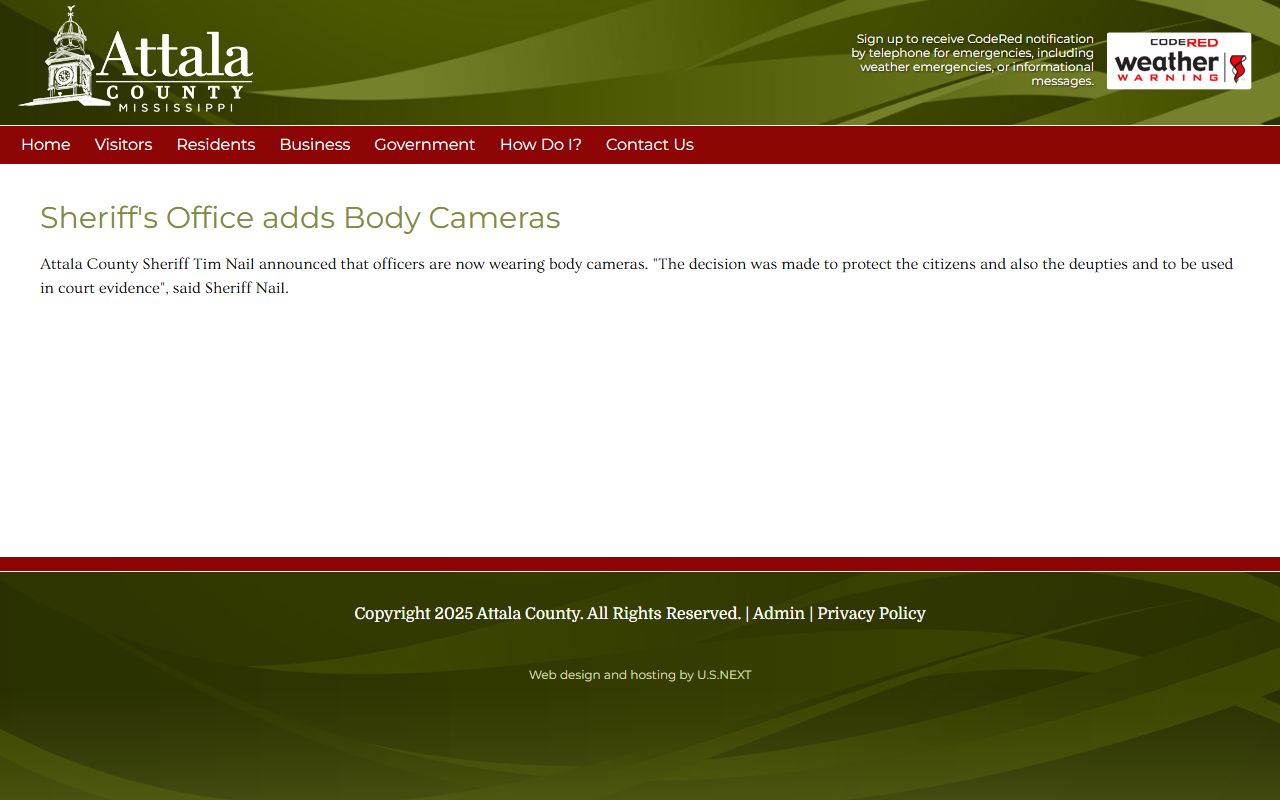
Footage like that can become part of the evidence behind a charge, which is one reason the charge a prosecutor files may shift as more facts come in.
Attala County Charge Status and What It Means
Charges are not fixed once they are filed. As a case moves, a charge can be amended, reduced, added, dropped, or dismissed. The status field in a case record tells you where each charge stands right now. Reading it correctly keeps you from assuming a result that has not happened yet, since a pending charge is still only an accusation.
| Status | What It Means |
|---|---|
| Pending | The charge is filed and active, with no final result yet. |
| Amended / Reduced | The charge was changed, often to a lesser offense, as the case developed. |
| Dismissed | The court ended the charge without a conviction. |
| Nolle Prosequi | The prosecutor chose not to pursue the charge, dropping it. |
Other labels you may see include disposed, closed, appealed, transferred, sealed, or a warrant and failure-to-appear flag. Exact Mississippi Electronic Courts status codes were not captured for public view, so confirm an unclear label with the clerk who holds the file.
Attala County Charge Codes and Severity Levels
Each charge is tied to a Mississippi statute and a severity level. The level tells you which court hears the matter and how serious it is. One arrest can produce several separate charges, each with its own code and level, which is why a single booking line may turn into a list of counts on the court record.
Charges sort into a few broad levels in Attala County:
- Felonies, the most serious offenses, prosecuted in Circuit Court after indictment.
- Misdemeanors, lower-level offenses heard in Justice Court or Kosciusko Municipal Court.
- DUI and county ordinance violations, handled at the Justice Court level.
- City-limit traffic and ordinance matters, handled in Municipal Court.
- Initial felony appearances and affidavits, filed first in Justice Court before they reach Circuit Court.
Counsel attaches early in many of these cases. The Day One public defender pilot reported early success in the Fifth Circuit District, which includes Attala County.

That pilot puts public defenders on a share of felony cases early, which can shape how charges are answered and resolved.
Charges vs. Convictions
Being charged is not the same as being convicted. A charge is the accusation the state files. A conviction is the result, reached only by a guilty plea, a no-contest plea, or a verdict after trial. Many charges never become convictions, because they are reduced, dismissed, or dropped along the way.
| Charge | Conviction | |
|---|---|---|
| Stage | Accusation | Verdict or plea |
| Burden of Proof | Probable cause | Beyond a reasonable doubt |
| Means Guilt | No | Yes |
| Public Record | Yes | Yes |
The full sequence of pleas, hearings, verdict, and sentence is kept in the Attala County criminal court records, where the disposition shows whether a charge ended in a conviction.
Background Check Considerations
People search arrest and charge records for many everyday reasons. A casual public-record lookup is not the same as a regulated background check. Formal screening for employment, housing, credit, or insurance must follow the federal Fair Credit Reporting Act and use a licensed consumer reporting agency. Pulling a name through a free court search does not meet that standard.
Recent local news shows why people check. A WLBT report on an Attala County law-enforcement search covered a suspect wanted after two deaths in the county.
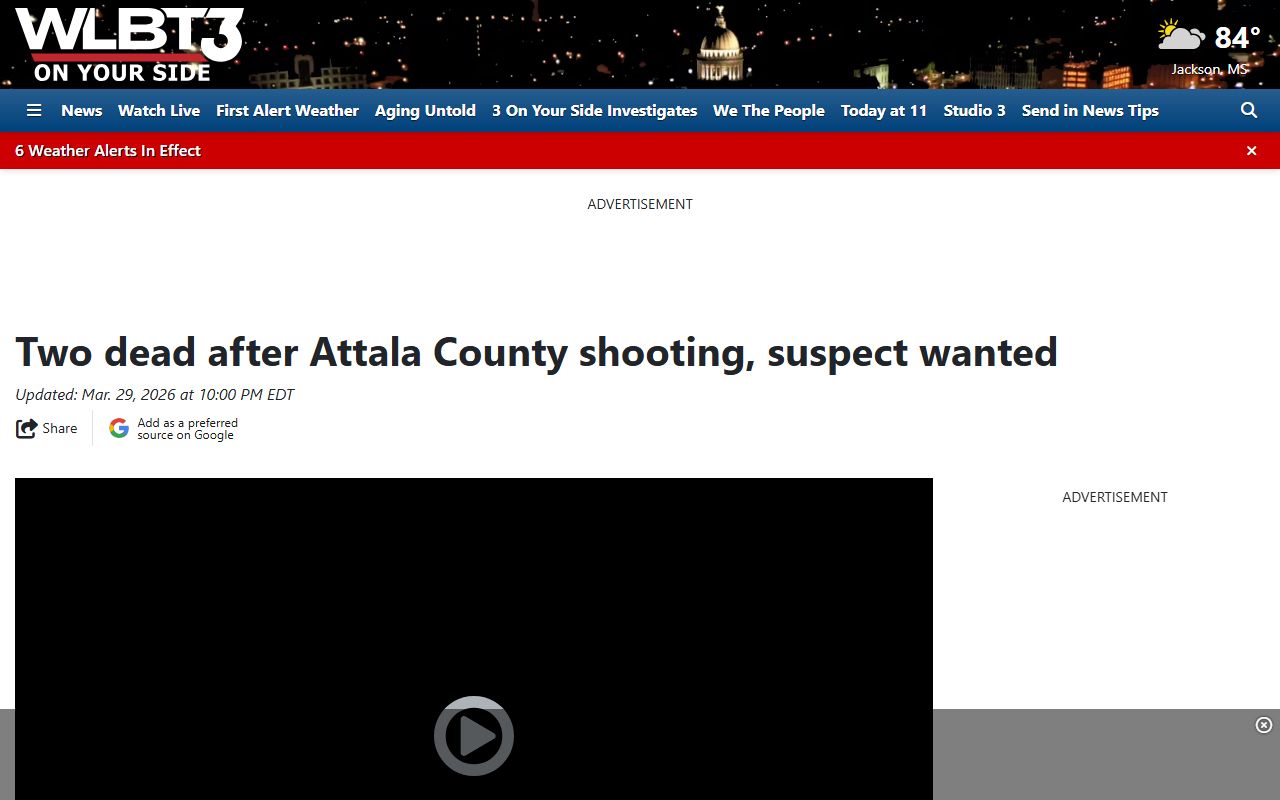
News coverage of an active search is not a court record, so the official charge information still has to come from the court file once any case is opened.
Important: This site is a private reference, not an FCRA-regulated consumer reporting agency, and its information may not be used for employment, housing, credit, or insurance screening.
Statewide Charge Lookups for Attala County Cases
Some charge information rolls up beyond the county. Once a person is sentenced and sent to state prison, the Mississippi Department of Corrections becomes the source for custody and offender data. The MDOC inmate search runs by name or by MDOC ID number and covers state inmates and parolees, not someone newly arrested and held in the Attala County jail.
| Field Label | Type | Required | Notes |
|---|---|---|---|
| Search Criteria | Radio | Yes | Choose Name or ID Number. |
| Last Name | Text | Conditional | Used when searching by name. |
| First Name | Text | Optional | Used when searching by name. |
| MDOC ID Number | Text | Conditional | Used when searching by ID number. |
| Search | Button | Yes | Runs the state offender search. |
Open the MDOC inmate search for sentenced offenders, and reach the Mississippi Department of Corrections Records Department at 601-933-2889 for written record requests. For certain offenses, charge and conviction data also appear on the Mississippi sex offender registry. Public access to court files themselves rests on the Mississippi Public Records Act, found through the Mississippi Ethics Commission, under which agencies may charge reasonable actual costs and redact exempt material.
Note: The Day One pilot and statewide e-filing are documented through the Mississippi Office of State Public Defender and the courts, but no standalone Fifth Circuit District Attorney website was located.
Restricted Charge Records in Attala County
Not every charge record is open to the public. Mississippi law keeps several categories closed or limited. Juvenile charges handled in Youth Court are not ordinary public lookup material. Sealed cases may show only limited docket information or none at all. Law-enforcement investigative reports can be exempt while the underlying incident report stays public, and ongoing investigations may withhold detail until a case is filed.
Sensitive data is also redacted from otherwise public files. That includes Social Security numbers, financial-account numbers, the names of minors, victim identifying details, and protected medical information. The clerk separates exempt material and releases the rest where the law allows.
Sealed vs. Expunged Records
Sealing and expunction are not the same. A sealed record still exists but is hidden from general public view. An expunged record is removed from public criminal-record access by court order, so it is treated as though it was never there. In Mississippi, expunction eligibility is detailed and offense-specific, and relief is never automatic.
| Sealed | Expunged | |
|---|---|---|
| Visibility | Hidden from public | Removed from public access |
| Law Enforcement | Limited access | Very limited access |
| How It Happens | By statute or court order | By granted court petition |
| Eligibility | Case and offense specific | Depends on conviction type, count, and waiting period |
Mississippi Code Section 99-19-71 is the core expunction statute, and a petition is normally filed in the court where the case ended. A granted court order is what authorizes removal, so no clerk or agency erases a charge simply because a person asks by phone. An Attala County expunction form or fee was not located, so confirm the current filing process and required order language with the correct clerk before filing.